A theoretical study on using Ie Suum's geothermal energy to drive a LiBr–water absorption cooling system for a mushalla.
The mushalla at the Ie Suum tourist area sits in a tropical climate with outdoor temperatures reaching up to 35°C. Like most small prayer facilities, it relies entirely on natural ventilation, which is often insufficient to maintain thermal comfort, especially during midday prayers when heat loads peak. At the same time, the area sits at the foot of Mount Seulawah Agam, an active volcano along the Pacific Ring of Fire, giving it access to a natural hot spring with a surface temperature of 87.9°C. This energy source is currently underutilized, primarily serving as a bathing attraction. The question became: can this low-grade geothermal heat drive a practical, electricity-free cooling system?
This research is a theoretical study combining thermodynamic analysis with process simulation. The goal was to evaluate whether the available geothermal energy from Ie Suum could realistically power an absorption chiller sized to meet the mushalla's cooling demand.
The study covered three main areas:
1. Geothermal Energy Potential
Field measurements of temperature and flow rate were conducted at two points, at the hot spring source and near the mushalla. The extractable thermal energy was then calculated using thermodynamic equations, confirming that the geothermal source carries sufficient heat to drive the absorption cycle.
2. Cooling Load Calculation
The mushalla has a floor area of 77.5 m² and a volume of 248 m³. Using Carrier HAP 6.2 with the Radiant Time Series (RTS) method per ASHRAE standards, the total cooling load was calculated at 35,7 kW, peaking at 16:00 in August. This accounts for wall, roof, floor, window, door, and ceiling transmission loads, along with occupancy (70 people), lighting (357 W), and infiltration.
3. Absorption Refrigeration System Design
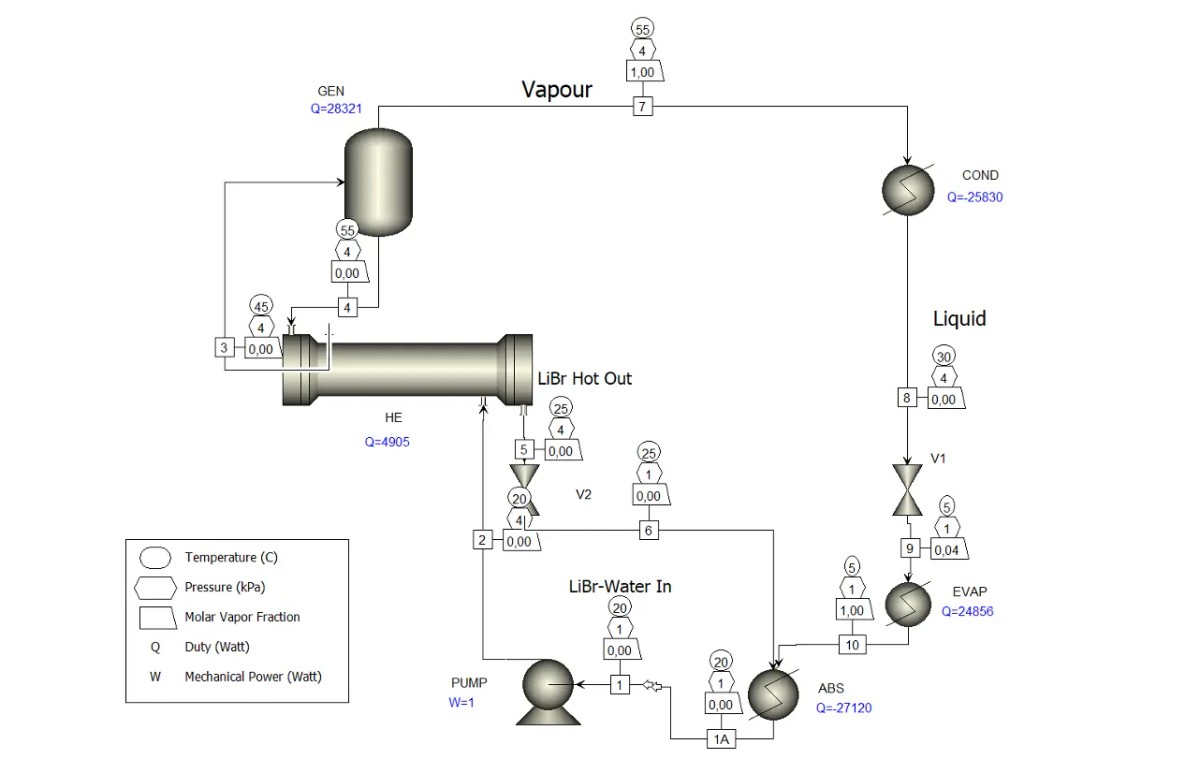
The LiBr–water single-effect absorption cycle was designed around the cooling load, with operating parameters set as follows: generator at 55°C, condenser at 30°C, evaporator at 5°C, and absorber at 20°C. Manual thermodynamic calculations based on energy and mass balance equations were carried out first, then validated using Aspen Plus V12 with the ELECNRTL property method.
The manual calculation yielded a COP of 0.87, consistent with the accepted range for single-effect absorption systems (0.7–1.0). Aspen Plus simulation confirmed the results with less than 1% deviation across all components.
Parametric analysis revealed the following trends:
The system demonstrates that a geothermal source at ≥55°C is sufficient to drive the cycle, making Ie Suum's hot spring a viable and practical energy input.
This study shows that LiBr–water absorption cooling is a technically feasible and environmentally sound alternative for small buildings in geothermal-rich areas. The system requires no large electricity supply, produces no synthetic refrigerant emissions, and can operate on heat that would otherwise go unused. For a community-funded facility like a mushalla, that combination of low operating cost and renewable energy use is a meaningful advantage.
Category
Process EngineeringDate
8 Juli 2026
Tools Used